







Long before anyone printed the words on a travel poster, Rishikesh was a place people walked to on foot, carrying little more than a blanket and a question about how to live. The town sits where the Ganga leaves the Himalayan foothills, and for centuries it has drawn sages, seekers and ordinary families on pilgrimage. Today it also draws thousands of students who come for yoga teacher training in Rishikesh, and understanding why the town earned its famous nickname helps explain why so many of them leave changed.
A Landscape That Invites Stillness
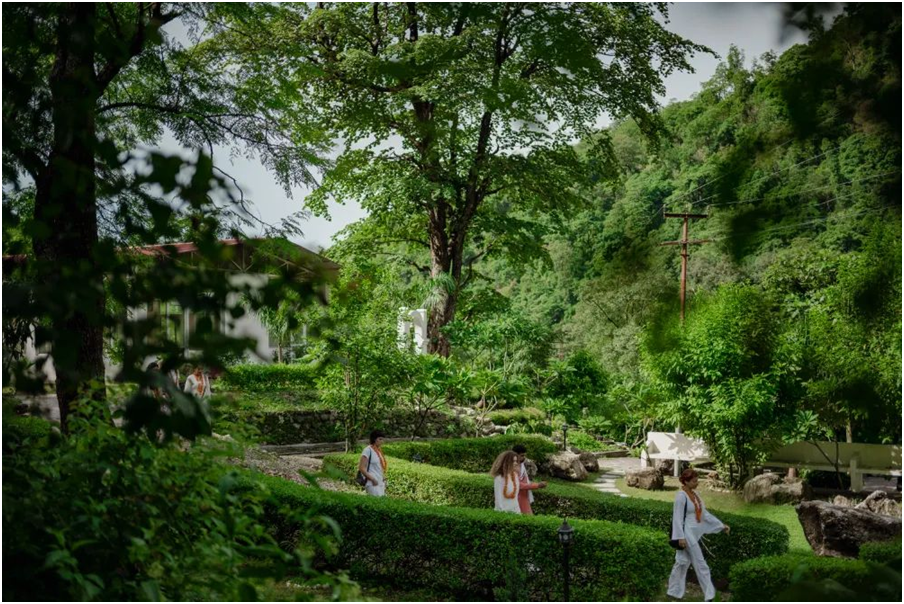
Geography is the first part of the answer. Rishikesh is wrapped in forested hills, with the river running fast and clear through the middle of town. Mornings are cool, the air is noticeably fresher than on the plains, and the sound of water is almost constant. Traditional texts describe the ideal place for practice as quiet, clean and close to nature, and this valley fits that description remarkably well.
The setting matters more than it might seem. When your surroundings are calm, it becomes easier to sit for meditation, to breathe slowly, and to notice what is happening inside rather than being pulled outward by noise and traffic. For most students, the natural starting point is a 200 hour yoga teacher training in Rishikesh, which builds the foundation everything else rests on.
Centuries of Spiritual Tradition
Rishikesh has been linked with ascetics and teachers for a very long time. Ashrams line both banks of the river, temples ring their bells at dawn and dusk, and the evening aarti on the ghats is a daily ritual rather than a show staged for visitors. Many of the lineages that shaped modern yoga have roots or branches here.
This continuity is what separates Rishikesh from a resort that simply offers classes. Yoga here is not a trend layered on top of the culture; it is woven into the rhythm of the town, from the sattvic food in local cafes to the chanting you hear drifting out of open windows.
A Global Moment That Spread the Word
In the twentieth century, Rishikesh became known far beyond India as Western musicians, writers and travellers visited its ashrams. Their stories carried the town’s name across the world, and a new generation of curious students followed. What they found was a place where they could study philosophy, breathwork and postures with teachers who had practised for decades.
Why It Still Matters for Students Today
The reputation has endured because the experience still delivers. A student arriving now can expect:
· Daily access to the river, temples and quiet walking trails
· A wide choice of schools, from traditional ashrams to modern training centres
· A community of practitioners from every continent
· Food, pace and culture that naturally support a disciplined routine
Of course, a famous name also attracts a lot of schools, and quality varies. It is worth researching teachers, syllabus and accreditation before you commit. Schools such as Adhiroha Yoga School in Upper Tapovan, which is registered with Yoga Alliance and recognised by the Ministry of Ayush, are a useful example of what to look for: clear credentials, a structured curriculum and an environment that respects the town’s traditions. If you are exploring options, reading about a structured yoga teacher training in Rishikesh can give you a sense of how a full course is organised.
The Title Is Earned Daily
Rishikesh is not called the yoga capital of the world because of a marketing campaign. It earned the title through its landscape, its long spiritual lineage and the countless people who have practised on its riverbanks. For anyone serious about deepening their practice or learning to teach, it remains one of the most meaningful places on earth to begin.