







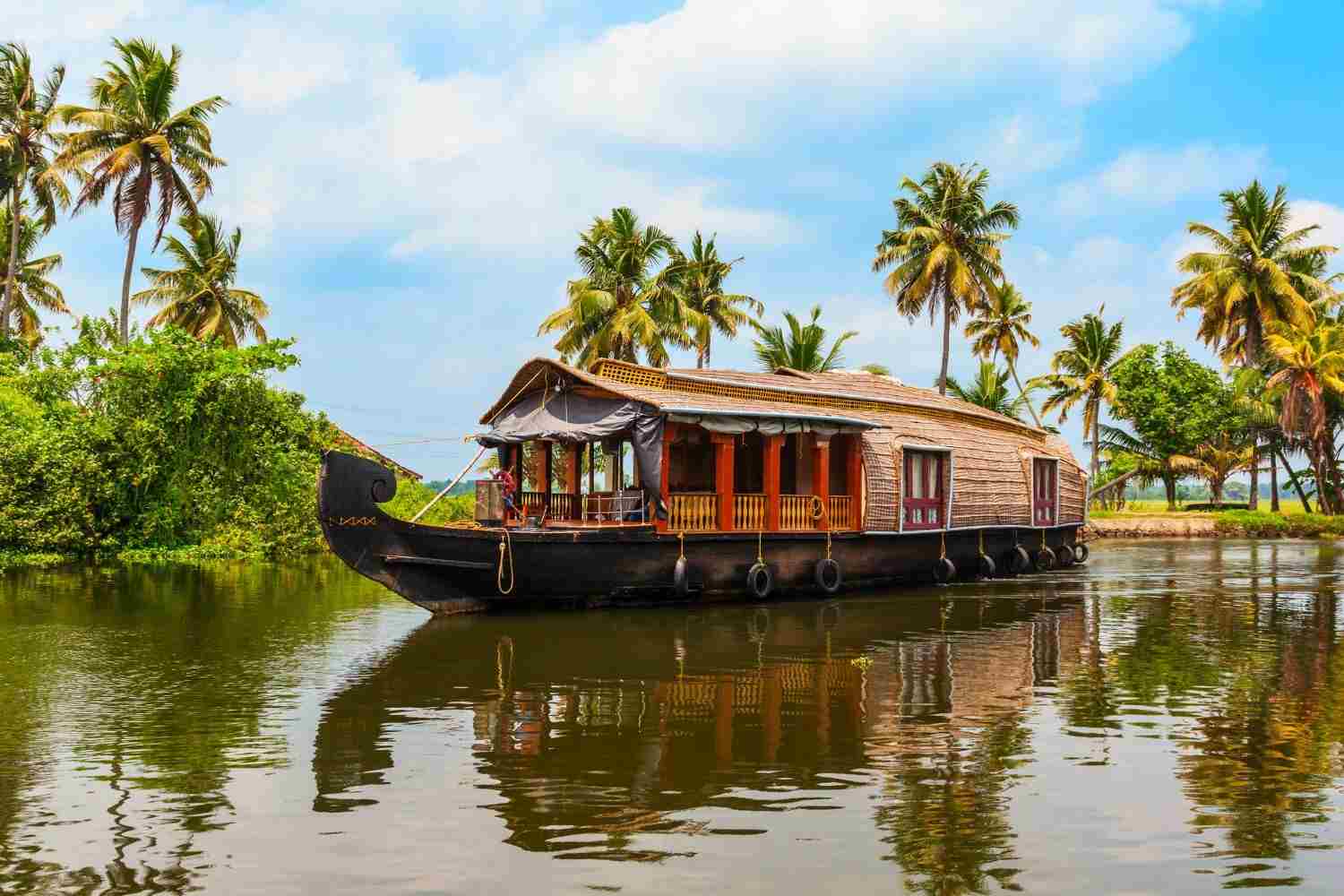
There is a particular moment that nearly every first-time visitor to Alleppey describes the same way: the engine of the houseboat cuts to a near-silent hum, the backwater opens up into a wide, mirror-still channel lined with coconut palms, and for the first time in the trip, there is nothing to do but sit, watch the water, and let the pace of the day slow down to match it. That moment is why Alleppey, more than any other destination in India, has become synonymous with the word “houseboat” itself. Other backwater towns exist across Kerala — Kumarakom, Kollam, Munroe Island — but Alleppey remains the place where the entire experience was essentially invented, refined, and perfected over several decades, and that history shows in everything from the quality of the boats to the depth of local knowledge about which routes actually deliver the experience travelers are hoping for.
The backwaters themselves are a genuinely unusual geography, which is part of why the experience feels unlike anything else available in Indian travel. Alleppey sits at the heart of a network of lakes, canals, rivers, and lagoons collectively known as the Kerala backwaters, fed by rivers draining from the Western Ghats and separated from the Arabian Sea by a narrow strip of land. This network supported a rice-farming and coir-producing economy for centuries before tourism arrived, and the traditional kettuvallam — literally “boat with knots,” referring to the coir rope construction that holds the wooden hull together without metal nails — was originally built to transport rice and goods along these waterways. The transformation of these working cargo vessels into the houseboats tourists book today happened gradually from the 1990s onward, and it’s a transformation that preserved the essential character of the boats even as the amenities on board became considerably more comfortable.
Choosing the right alleppey house boat is less straightforward than it might first appear, largely because the range on offer is genuinely wide — from simple single-bedroom boats suited to couples, through to elaborate multi-bedroom vessels built for families or small groups. The traditional kettuvallam design remains the most popular choice, prized for its thatched roof construction, wooden interiors, and the sense of authenticity it carries compared to the more modern fiberglass houseboats that have also entered the market. What experienced travelers quickly learn is that the boat’s design matters less than three practical factors: the specific route it travels, the quality and freshness of the food served on board, and the professionalism of the crew — typically a captain and a cook, sometimes a third crew member for larger boats — who will be your hosts for the duration of the cruise.
Route selection genuinely changes the character of the trip more than most first-time visitors expect. A houseboat departing from Alleppey town and heading toward Vembanad Lake — India’s longest lake — offers wide-open water views and dramatic sunsets, but spends comparatively less time winding through the narrow village canals that many travelers picture when they imagine a backwater cruise. Routes that head instead through the smaller canals near Kainakary and the paddy field villages offer a completely different texture: narrow waterways just wide enough for the boat to pass, village life visible on both banks, small temples and churches appearing at the water’s edge, and the unmistakable rhythm of rural Kerala continuing exactly as it has for generations, apparently unbothered by the boat drifting past. Neither route is objectively better — the choice depends entirely on whether a traveler wants the postcard-wide-lake experience or the more intimate village-canal experience — but it’s a choice worth discussing explicitly when booking rather than assuming all routes are interchangeable.
Timing a trip well requires understanding Kerala’s two genuinely distinct cruising seasons, each with its own character. The post-monsoon months from October through February bring the backwaters to their most lush and visually dramatic state, with full water levels, vivid green paddy fields, and comfortable daytime temperatures that make the open-deck seating area the best spot on the boat for most of the day. The summer months from March through May run considerably hotter and more humid, which some travelers avoid entirely, though the backwaters remain navigable and the crowds thin out noticeably, which has its own appeal for travelers prioritizing a quieter experience over ideal weather. The monsoon season itself, roughly June through September, is the most divisive: water levels rise dramatically and the landscape turns an almost impossibly intense green, but rain can interrupt the open-deck experience that many travelers come specifically for, which is worth weighing honestly before committing to a monsoon-season booking.
Food on a houseboat deserves far more attention than most travel guides give it, because for many visitors it ends up being the unexpected highlight of the entire trip. The standard arrangement includes all meals prepared fresh on board by the boat’s dedicated cook, typically featuring Kerala’s distinctive coconut-based curries, freshly caught river fish — karimeen, the Kerala pearl spot, is the dish most travelers remember long after the trip ends — and rice served on a traditional banana leaf. Vegetarian travelers are well accommodated on virtually every reputable boat, though it’s worth confirming dietary requirements, spice tolerance, and any allergies explicitly at the time of booking rather than assuming the crew will guess correctly once underway. The quality difference between a boat with a genuinely skilled, experienced cook and one that treats meals as an afterthought is significant enough that past-guest reviews specifically mentioning the food are worth weighing heavily during the decision process.
Overnight cruises, typically running twenty-two to twenty-four hours from a midday boarding to the following morning’s disembarkation, remain the most popular format and for good reason — they allow enough time to genuinely settle into the slower pace that makes the experience worthwhile, rather than rushing through it as a brief daytime activity. The boat typically anchors for the night in a quiet stretch of water away from the main tourist routes, and the experience of watching the backwaters at sunset, through dinner, and into a genuinely dark, quiet night — with minimal light pollution and often a dramatic view of stars — is frequently cited by returning travelers as the single most memorable part of their entire Kerala trip. A handful of shorter daytime cruise options exist for travelers on tighter schedules, and these can still deliver a worthwhile taste of the backwaters, though they inevitably miss the overnight stillness that defines the fuller experience.
Practical preparation makes a genuine difference to how much a traveler enjoys the actual time on the water, and it’s worth being specific rather than vague about it. Light, breathable cotton clothing suits the climate far better than synthetic fabrics, which trap heat quickly in Kerala’s humidity. A good pair of sunglasses and reef-safe sunscreen matter more than most travelers expect, since much of the day is spent on an open deck with direct sun reflecting off the water’s surface. Mosquito repellent is worth packing even though most reputable boats provide nets and basic protection, particularly for the early evening hours when insect activity picks up near the water’s edge. Cash in smaller denominations is useful for tipping crew at the end of the trip — a customary and appreciated practice, though never strictly obligatory — since card payment infrastructure on the water itself is, understandably, nonexistent.
There’s also a quieter, more meaningful dimension to choosing a well-run houseboat operator that goes beyond personal comfort: the backwater tourism economy directly supports thousands of local families across Alleppey district, from the boat crews and cooks to the coir-rope artisans who still hand-build traditional kettuvallam hulls using techniques passed down through generations. Operators who pay crew fairly, maintain their boats to proper environmental standards — including responsible waste handling, since the backwaters are a genuinely fragile ecosystem that has suffered from pollution in the past — and work in good faith with the local village communities their routes pass through are directly sustaining the very thing that makes this experience special in the first place. Choosing thoughtfully, in other words, isn’t just about getting a better trip for yourself; it’s a small but real vote for the kind of tourism that keeps Alleppey’s backwaters healthy for the next generation of travelers.
For travelers planning their first trip, the most useful advice is also the simplest: start the booking process with enough lead time to actually compare boats, routes, and crews rather than booking the first option that appears, particularly during the peak October-to-February season when the most sought-after boats fill up weeks in advance. A thoughtful kerala house boat booking made with genuine attention to these details — route, season, food quality, and crew reputation — consistently produces a far more memorable trip than one booked purely on price or availability at the last minute. Alleppey earned its reputation as Kerala’s houseboat capital over decades of refining exactly this experience, and travelers who take the time to book thoughtfully are the ones who leave understanding precisely why that reputation exists in the first place.