







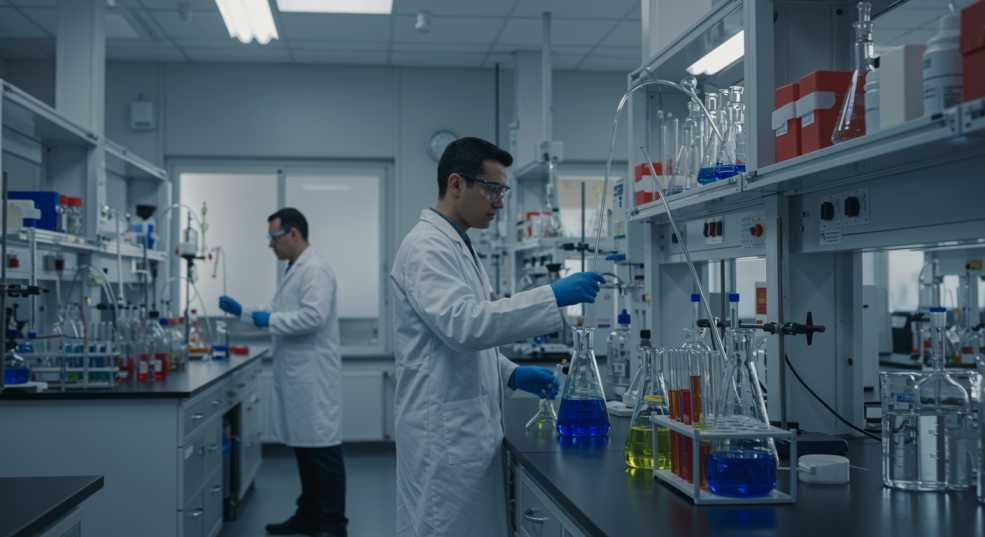
The journey from a conceptual molecular structure to a life-saving pharmaceutical is fraught with chemical complexities and rigorous structural hurdles. In the competitive race to bring novel therapeutics to market, the ability to synthesize complex molecules with high purity and speed is often the deciding factor between success and a stalled pipeline. For biotechnology and pharmaceutical firms, leveraging world-class synthetic chemistry services is no longer just an operational choice; it is a strategic necessity to navigate the intricate landscape of drug discovery and development.
The Role of Precision Synthesis in Modern Medicine
At the heart of every breakthrough drug lies a carefully engineered molecule. Synthetic chemistry serves as the architectural foundation of this process, allowing researchers to build, modify, and optimize chemical entities to achieve desired biological activities. Whether it involves the synthesis of small molecule libraries or the creation of complex macrocycles, the precision required is immense.
Modern drug discovery demands more than just basic bench chemistry. It requires a deep understanding of retrosynthetic analysis, asymmetric synthesis, and organometallic chemistry. Specialized synthetic chemistry services provide the high-level expertise needed to tackle challenging multi-step syntheses, enabling the rapid production of lead candidates. This specialized support allows internal research teams to focus on biological validation and clinical strategy while leaving the heavy lifting of molecular construction to expert chemists.
Navigating the Outsourcing Landscape for Competitive Advantage
As the cost of R&D continues to climb, many innovators are shifting toward a “lean” model of drug development. This involves partnering with Contract Research Organizations (CROs) that can provide scalable solutions tailored to specific project needs. According to reports by Forbes, the pharmaceutical industry is increasingly turning to outsourcing to manage costs and access specialized technological platforms that would be prohibitively expensive to maintain in-house.
By integrating professional synthetic chemistry services into their workflow, companies can access a vast array of technologies, including flow chemistry, microwave-assisted synthesis, and high-pressure reactions. This access accelerates the SAR (Structure-Activity Relationship) cycle, ensuring that only the most promising compounds move forward into the development phase. Furthermore, a reliable partner ensures that all synthetic routes are documented and scalable, preventing costly redesigns during the transition from the laboratory to the pilot plant.
Key Components of High-Value Chemical Support
To truly add value to a drug discovery program, a chemistry partner must offer more than just catalog compounds. The most effective service providers focus on several critical areas:
- Custom Synthesis: Tailoring unique molecules that are not commercially available, including intermediates, reference standards, and metabolites.
- Process R&D: Developing robust, safe, and cost-effective synthetic routes that can be easily scaled up for larger trials.
- Library Design: Building diverse chemical libraries to explore vast chemical spaces during the early hit-to-lead phase.
- Structural Characterization: Utilizing advanced analytical tools like NMR, HPLC, and LC-MS to ensure nearly 100% purity and correct regio- and stereochemistry.
Overcoming Challenges in Molecular Complexity
Today’s drug candidates are becoming increasingly complex. We are seeing a move away from “Rule of Five” compliant small molecules toward more diverse chemical space, including proteolysis-targeting chimeras (PROTACs) and specialized peptide mimetics. Synthesizing these molecules requires a mastery of protecting group strategies and specialized coupling reagents.
A partner providing high-end synthetic chemistry services acts as an extension of your own laboratory. They troubleshoot difficult reactions, optimize low-yielding steps, and suggest alternative synthetic pathways that might have been overlooked. This collaborative approach not only saves time but also significantly reduces the risk of project failure due to synthetic roadblocks.
Driving Innovation Through Chemical Excellence
The path to a successful clinical candidate is built on the strength of its chemical foundation. As the pharmaceutical industry evolves, the collaboration between visionary researchers and expert synthetic chemists will remain the primary engine of innovation. By choosing a partner that offers deep technical knowledge and a commitment to quality, companies can significantly compress their development timelines and bring new treatments to patients faster.